residential cabinetry, with a focus on free standing kitchen cabinets
kitchens from the 1830s to 1920s
It is not necessary to consider the history of free standing cabinetry in order to contemplate its use today. However, I think by considering some history it enables us to appreciate the decisions on how freestanding kitchen cabinets may be used today.
The timeframe considered here is roughly AD 1830s through 1920s. During this time, cast iron has allowed stove use for heating and cooking to proliferate, also cast iron piping making indoor plumbing adopted even in the residential setting.
The 1920s home plans show off more built-in cabinetry, both in the kitchen and elsewhere in the house. Built-in versus fitted cabinetry is not delineated easily. Built-in cabinetry often is constructed along with the house and trimwork and stain or paint used elsewhere in the house is used to finish the cabinetry. Fitted cabinetry is bought and pieced to the kitchen, using standard dimensions, generally costs less.
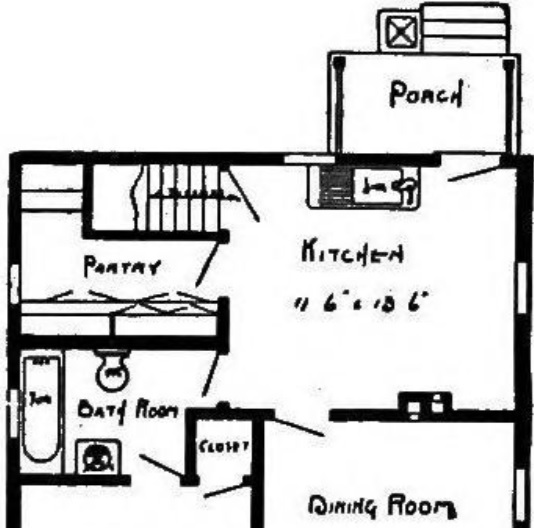 This illustration is from the Lumberman's house plan book by Radford Architectural Company published 1907. It shows the layout of the kitchen for house plan #1138. The sink is marked out and is probably a wet sink since there is an indoor bathroom. Notice the chimney flue on the opposite wall, one of those flues are probably intended to serve a kitchen range, coal or wood fired. No cabinetry is marked out in the kitchen. Cabinets and tables were all independent pieces of furniture that the designers probably intended to fill the kitchen. The year this house plan book was published it was about midway through the Arts and Crafts movement in the decorative and fine arts, which one trend were builtin cabinetry in house designs, and later commercially sold house plans begin featuring builtin cabinets, such as either side of fireplaces and in the dining room for china.
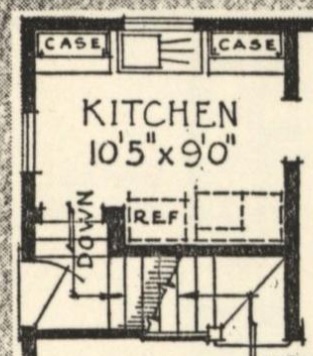
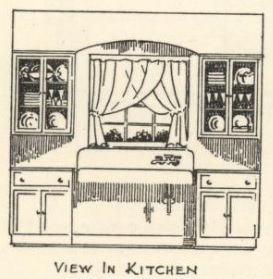 These illustrations come from the Lake Shore Lumber home plans from 1925. The illustration on the left shows the kitchen layout with base and shelving cabinetry labeled "CASE" on either side of a wall mounted wet kitchen sink; opposite is the refridgerator, next to what would be kitchen range, no chimney is illustrated so the range is likely intended to burn oil, gasoline, electric, or some type of gas probably manufactured. (You read that correctly, gasoline was one of the fuels being offered for cooking ranges, though the quality of gasoline was less than the automotive fuel we use today, in any case it lost favor as a cooking fuel.) The illustration on the right is a depiction of what the kitchen and cabinets on either side of the wet sink mounted beneath the window was envisioned to be like. The illustrated cabinets are likely the fitted type.
next, or return to the menu